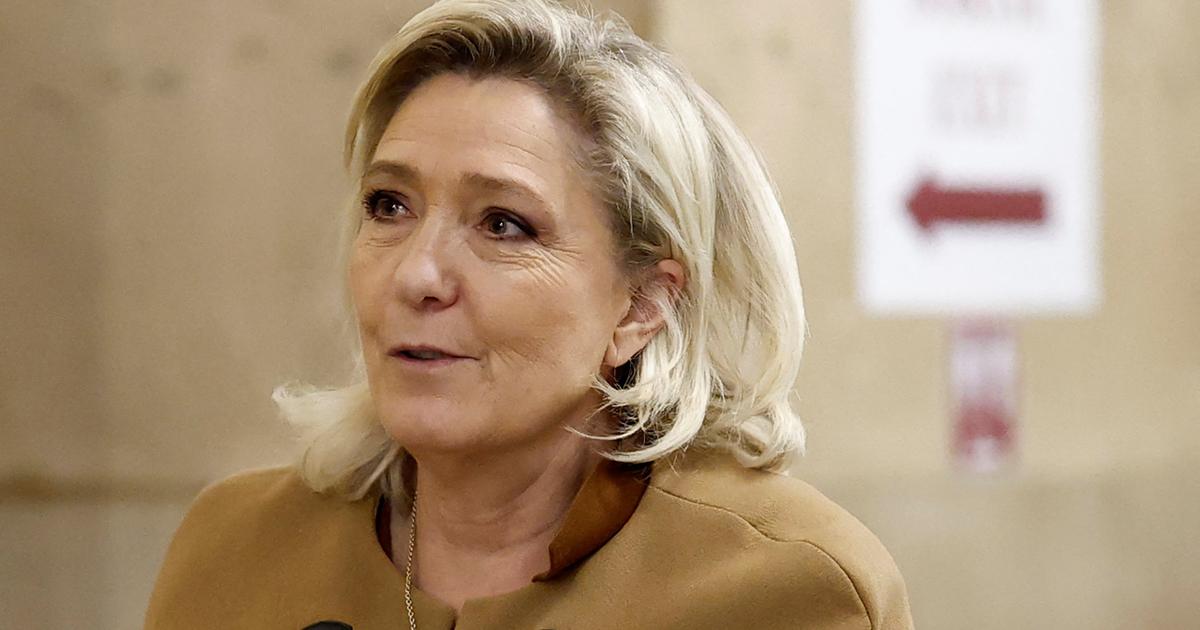
The political landscape of France is on tenterhooks as a pivotal court verdict looms large over the future of Marine Le Pen, the charismatic leader of the National Rally (RN) and a three-time presidential candidate. Her aspirations for the 2027 Elysée Palace race, widely considered her strongest chance yet, now hinge precariously on the decision of three Parisian judges. Le Pen's recent statements, notably during a high-profile Marine Le Pen interview with French broadcasters like CNEWS and BFM TV, have laid bare the profound personal and political implications of the upcoming ruling, including the dramatic possibility of an electronic bracelet derailing her campaign before it even begins.
The Looming Legal Battle: A Threat to 2027 Ambitions
At the heart of Le Pen's current predicament is a long-running legal saga concerning allegations of a "fraudulent system" within her party. This system, a Paris court ruled in March 2025, was allegedly used to misappropriate European Parliament funds totaling €2.9 million. The initial verdict was stark: a five-year ban from public office, effectively disqualifying her from the 2027 presidential election, and a four-year prison sentence.
Le Pen has not taken these accusations lightly. During her appeal trial, she acknowledged that some employees, officially paid as EU parliamentary aides, did indeed perform work for the National Rally. However, her defense has consistently maintained that she believed such arrangements were permissible under the rules at the time and that there was no deliberate attempt to conceal them. She further reproached European Parliament officials for failing to flag these practices as violations earlier. This nuance in her defense, revealed during her court appearances and echoed in various Marine Le Pen interview segments, highlights her insistence on a misunderstanding rather than outright deception.
The appeal trial concluded on February 11, and the political world now awaits the verdict, set for July 7. Should the appeals court uphold the initial sentence, Marine Le Pen's bid for the presidency in 2027 would be definitively halted. This outcome would not only mark a personal defeat for Le Pen but also necessitate a significant strategic pivot for the National Rally, a party that has steadily risen under her leadership to become a dominant force in French politics.
Campaigning Under Duress: The Ankle Bracelet Dilemma
Perhaps the most striking aspect of Le Pen's recent public commentary is her unequivocal stance on an electronic bracelet sentence. In a series of Marine Le Pen interview discussions, she made it clear: if the court imposes an electronic bracelet, she will not run for president in 2027, even if an electoral ban were to be lifted. "We can't campaign under these conditions," she asserted during an interview with BFM TV, emphasizing the impossibility of "campaigning under house arrest."
Practical Impediments to a Presidential Campaign
Her reasoning is rooted in the practical realities of a presidential campaign in France. Such a campaign demands relentless travel, evening rallies, unannounced visits to local communities, and constant direct engagement with constituents across the country. An electronic bracelet, typically imposing strict movement restrictions and curfews, would fundamentally cripple a candidate's ability to connect with voters, participate in debates, and project the image of a national leader. As Le Pen herself questioned, "Can you campaign without going out in the evenings to meet your constituents at rallies?" The answer, for a presidential hopeful, is an emphatic no.
This statement underscores the deep chasm between the legal strictures she faces and the political necessities of a modern campaign. It effectively means that even a partial sentence, designed as a less severe alternative to incarceration, would still constitute an insurmountable barrier to her presidential ambitions. For observers, this highlights the intricate and sometimes conflicting demands of the judicial system and the democratic process.
2027: A Pivotal Election and the Far-Right's Prospects
The 2027 presidential election is shaping up to be an unusually open contest. President Emmanuel Macron, having served two consecutive terms, is constitutionally barred from seeking re-election. This absence creates a void that many political analysts believe presents Marine Le Pen with her best, perhaps final, opportunity to achieve France's top job. She has consistently reached the second round in the 2017 and 2022 elections, losing to Macron both times, but demonstrating a growing electoral base and a remarkable ability to mobilize support for the far-right.
With Macron out of the picture, the field is wide open, and the National Rally, under Le Pen's guidance, has positioned itself as a formidable force. The party has successfully broadened its appeal beyond its traditional base, capitalizing on concerns over immigration, security, and purchasing power. The prospect of Le Pen, a seasoned campaigner with a known platform, entering the race without an incumbent of Macron's stature to contend with, has fueled speculation that 2027 could finally be her moment.
The Rise of Jordan Bardella: A Successor in Waiting?
However, Le Pen's fate is not entirely in her hands. As she stated in a recent Marine Le Pen interview, "I know perfectly well that the decision regarding this candidacy isn't mine to make. It’s in the hands of three judges who will decide whether or not the millions of French people who want to vote for me will be able to do so."
Should the court rule against her, preventing her from running, the National Rally has a clear successor in waiting: Jordan Bardella. As RN president and Le Pen's protégé, Bardella has rapidly ascended the party ranks, projecting a younger, more polished image while adhering closely to the party's core ideology. Polls, such as one from November 2025, suggest that Bardella could potentially win the second round of the 2027 elections, regardless of who he faces. This highlights the party's strategic depth and the successful cultivation of a viable alternative leader.
Le Pen has been careful to delineate her potential role in such a scenario. She stated that if she cannot be a candidate, Bardella "will determine at what level he needs my presence, my advice and my experience." She emphasized Bardella's autonomy, rejecting any notion of "guardianship," stating, "Jordan will find a prime minister, I have no doubt about that." This suggests a desire to remain an influential figure behind the scenes, offering counsel and experience while allowing Bardella to lead independently. This potential transition is a critical storyline for understanding Le Pen's Legal Battle & Far-Right's 2027 Presidential Future.
Beyond the Verdict: Reshaping French Political Dynamics
The verdict on July 7 will undoubtedly send shockwaves through French politics, regardless of the outcome. If Le Pen is cleared or receives a lenient sentence that allows her to run, the 2027 election will likely be dominated by her highly anticipated bid, presenting a direct challenge to the established political order. Her presence would galvanize the far-right and force other parties to recalibrate their strategies.
Understanding the Democratic Stakes
Conversely, if she is disqualified, the immediate impact on the National Rally would be significant. While Bardella is a strong candidate, the absence of Le Pen – a household name and the architect of the party's mainstreaming – would undoubtedly alter the dynamics. The party would need to ensure a seamless transition and convince voters that its vision remains consistent and compelling. Political scientist Luc Rouban, in an interview, reflected on the broader implications of such rulings, suggesting they "represent an effort to make democracy better" by upholding standards of public office. This perspective underscores that the legal proceedings are not merely about an individual's fate but about the integrity of the political system itself.
The impending judgment is a stark reminder that even the most formidable political careers can be subject to the decisions of the judiciary. For citizens and political observers, understanding the legal nuances, the stated intentions of key figures like Marine Le Pen during her interviews, and the potential electoral ripple effects is crucial for grasping the trajectory of French democracy in the years to come.
In conclusion, Marine Le Pen's political destiny for 2027 hangs precariously in the balance. The July 7 court verdict is more than a legal formality; it is a pivotal moment that will either unleash her strongest presidential bid yet or usher in a new era for the French far-right under Jordan Bardella. Her candid remarks during various interviews about the impossibility of campaigning under restrictive conditions highlight the extraordinary stakes. Regardless of the outcome, the ruling will profoundly reshape the political landscape, influencing electoral strategies, party dynamics, and ultimately, the future leadership of France.